Storing the Sacred
An exploration of the ways people of different faith groups store sacred objects.
An exploration of the ways people of different faith groups store sacred objects.
Sacred objects are items imbued with holy meaning.
An object may become sacred through its relevance to the practice of a religion, because it was owned by someone of religious significance, or because it is representative of a sacred figure or idea.
Connecting the collections of the Hunt Museum and the Chester Beatty Museum, the objects in this exhibition demonstrate some of the ways in which people of different belief systems store sacred items.
Reliquaries are special containers that are used to hold and protect religious relics.
Relics are objects associated with holy people that, through their association with individuals of religious prominence, have been imbued with holiness as well. Relics can include personal effects (such as clothing), human remains (such as bones or ashes), and items that the holy figure came into contact with. They are often preserved in reliquaries and venerated.
A casket, or châsse, is a style of Christian reliquary that was common in medieval times. They were usually made of metal and decorated with gold and enamel, although some are made of ivory. Many Christian caskets feature images of saints on their exteriors, so it is believed that such caskets would hold relics of the saints displayed on them.
Reliquary caskets were acquired by churches and displayed on special occasions.
13th century
Gilded bronze
On display in the Hunt Museum in the Treasury.
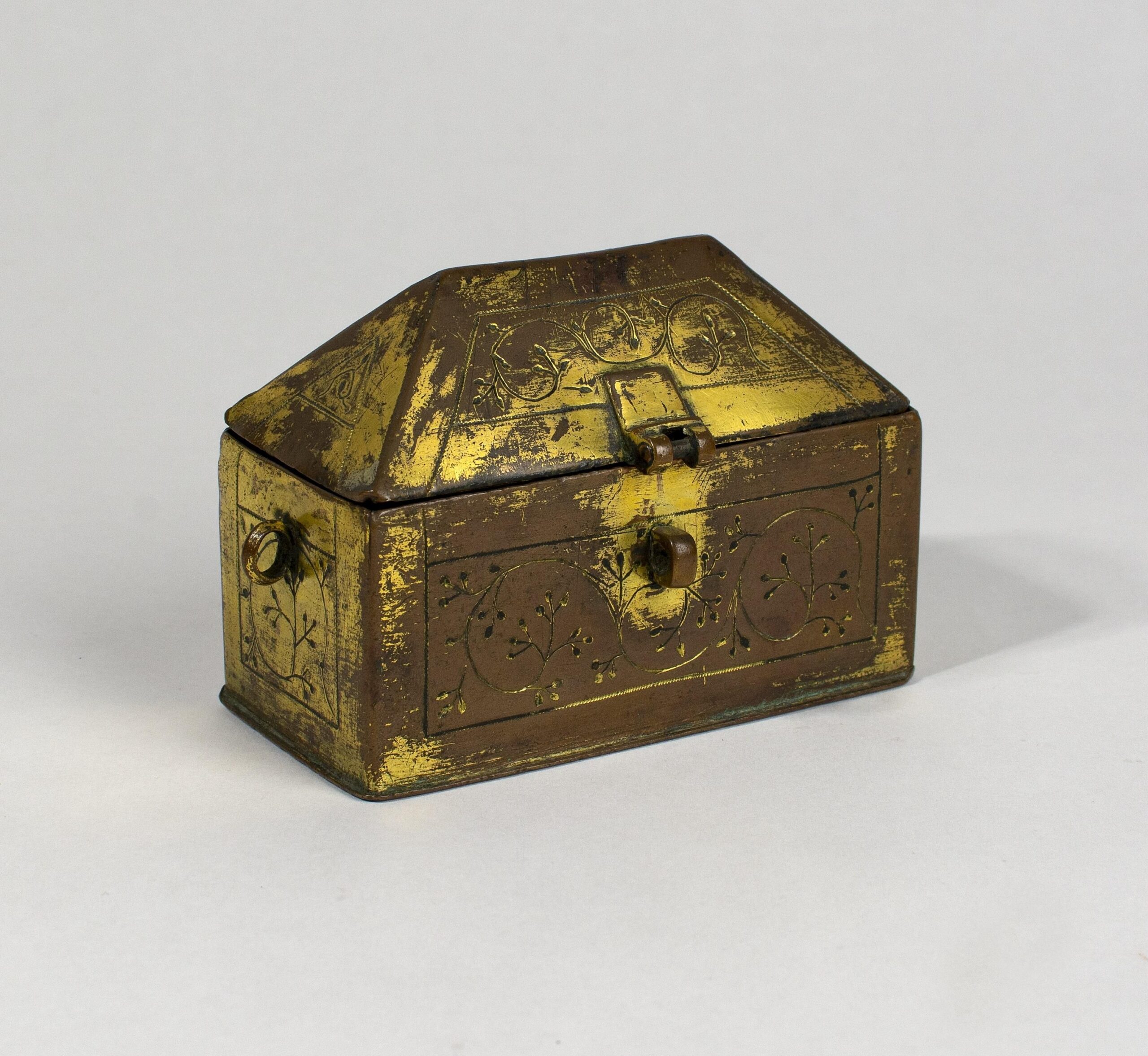
Châsse (Reliquary Box)
HCM 082
13th century AD
Gilded bronze
13th century
Gilded bronze
On display in the Hunt Museum in the Jewellery Room.
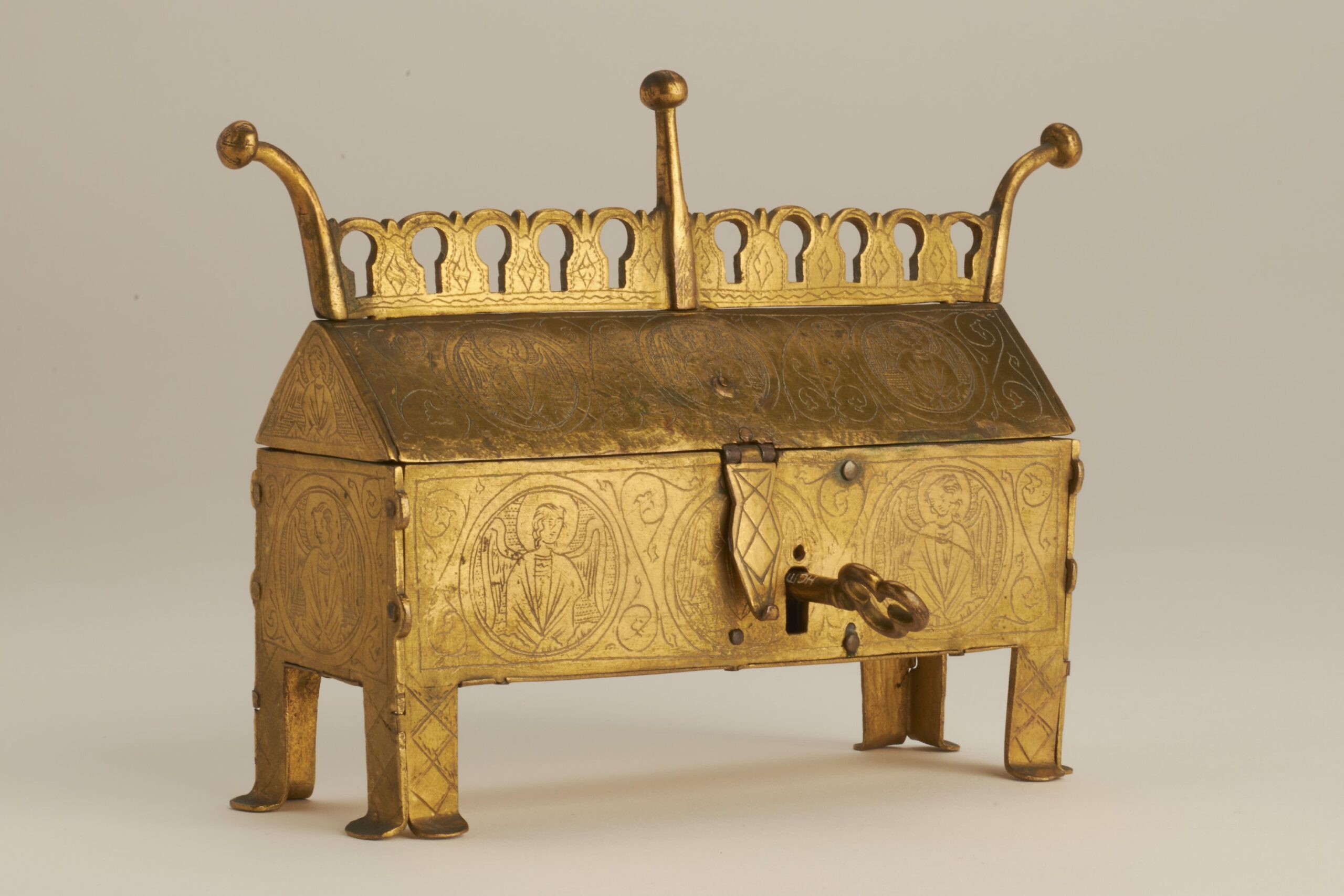
Engraved Bronze House-Shaped Reliquary Châsse (Box)
HCM 081
13th century AD
Gilded bronze
1200 – 1250
Bronze, champleve enamel
On display in the Hunt Museum in the Treasury.
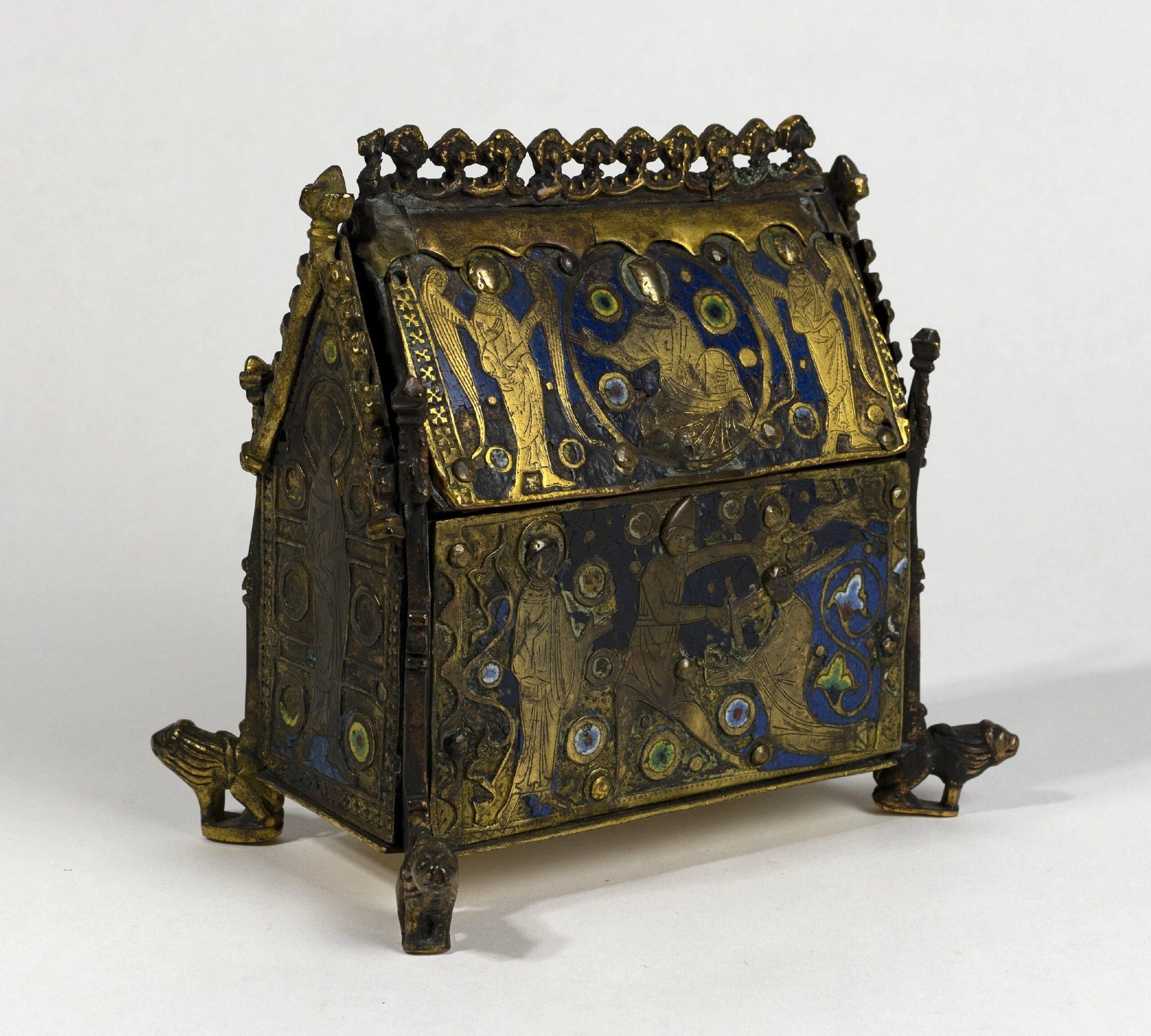
Limoges Reliquary Châsse
HCM 080
1200 - 1250
Bronze, champleve enamel
12th to 14th century
Ivory, gilded copper, glass, enamel
Ivory caskets have a surprising mix of cultural influences. First, Norman Christians commissioned them, then they were made by Islamic artisans in Sicily, and finally, they were fitted with metal decorations elsewhere in Europe.
Ivory caskets are on display throughout the Hunt Museum. You can find this one in the Medieval Room.
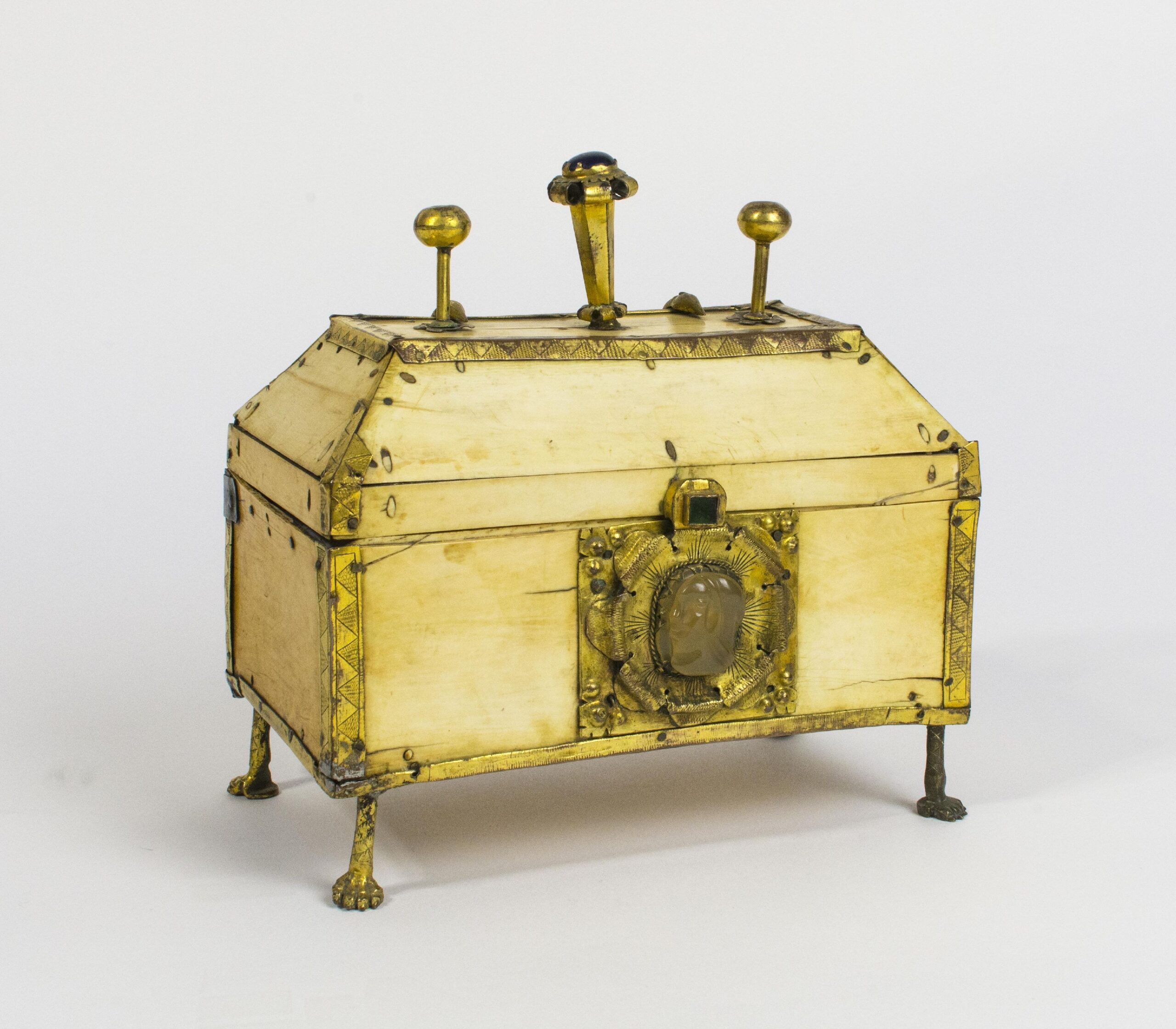
Ivory Casket
CG 011
12th to 14th century AD
Ivory, gilded copper, glass, enamel
Reliquaries are not only stately boxes -- they can also take the form of pendants.
Fatimid, 10th century
Rock crystal
One such pendant reliquary is this miniature perfume flask. Created in Egypt in the 10th century, it was originally intended for perfume. Objects like this one made their way into churches, where their delicate shapes and intricate designs took on new meaning as Christian reliquaries. Some were given caps made of gold and enamel to protect their sacred contents.
This perfume flask is currently on display in the Medieval Room of the Hunt Museum.
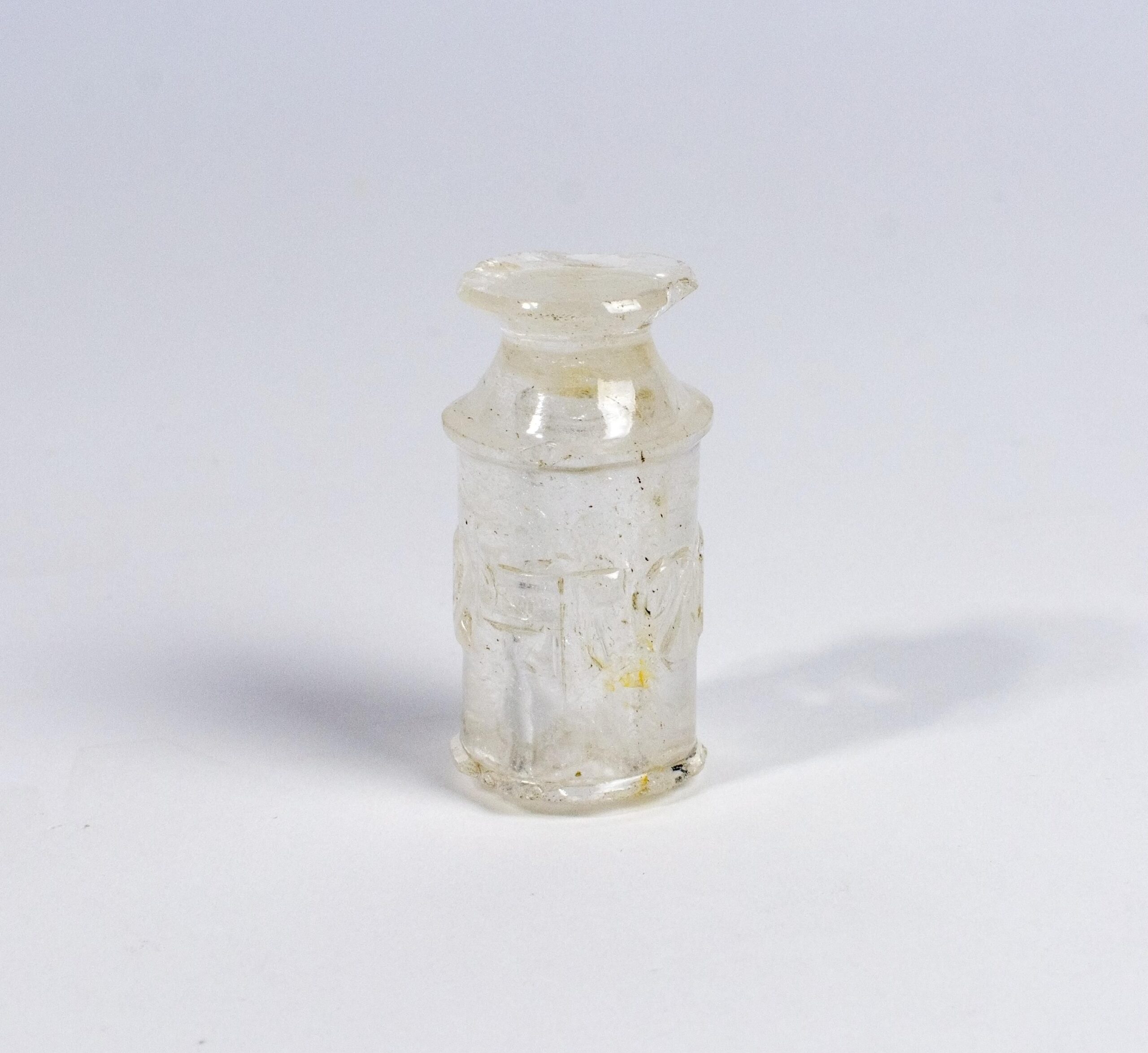
Perfume Flask
MG 009
Fatimid, 10th century
Rock crystal
Another form of Christian reliquary is a crucifix with a small, internal compartment for storing the relic. The reliquary crosses in this exhibition were intended to be worn as pendants, which allowed the wearer to constantly be in possession of the relic. The intricate decorations on these crosses include engravings of the instruments of the passion and representations of Christ.
These reliquary crosses are currently on display in the Hunt Museum in the Jewellery Room.
16th century
Gold, enamel
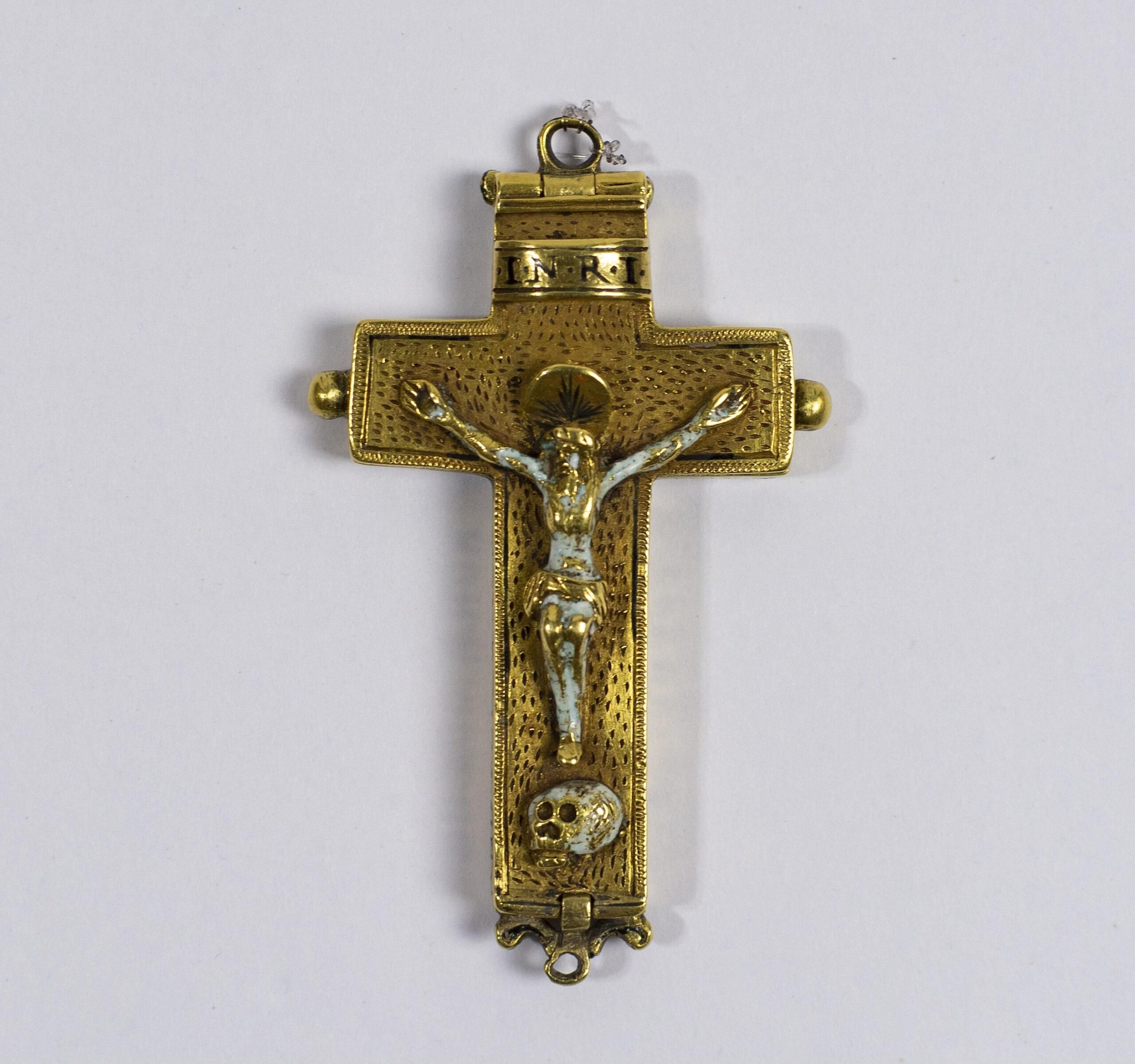
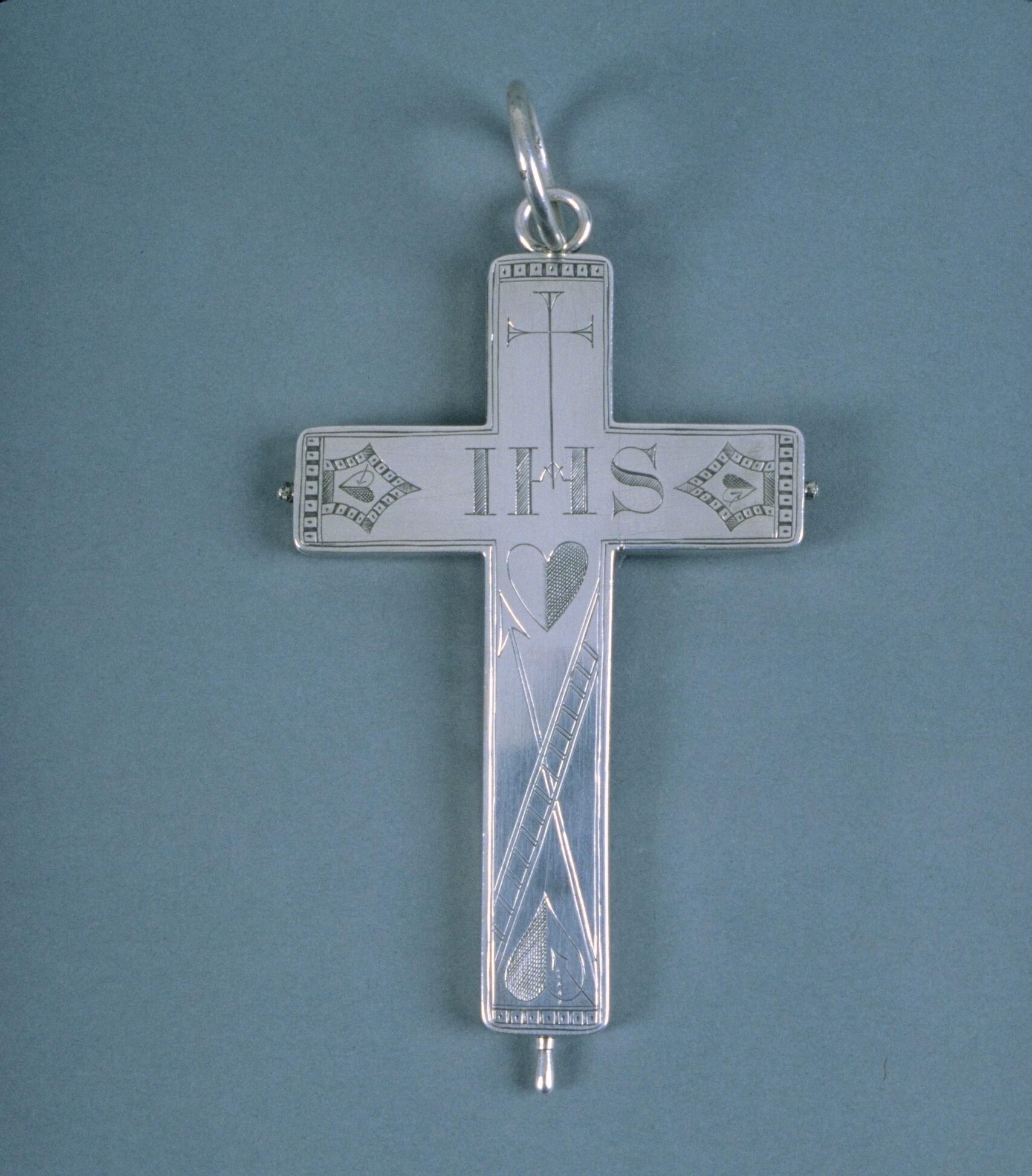
Crucifix (Reliquary cross)
HCM 074
17th or 18th century AD
Silver
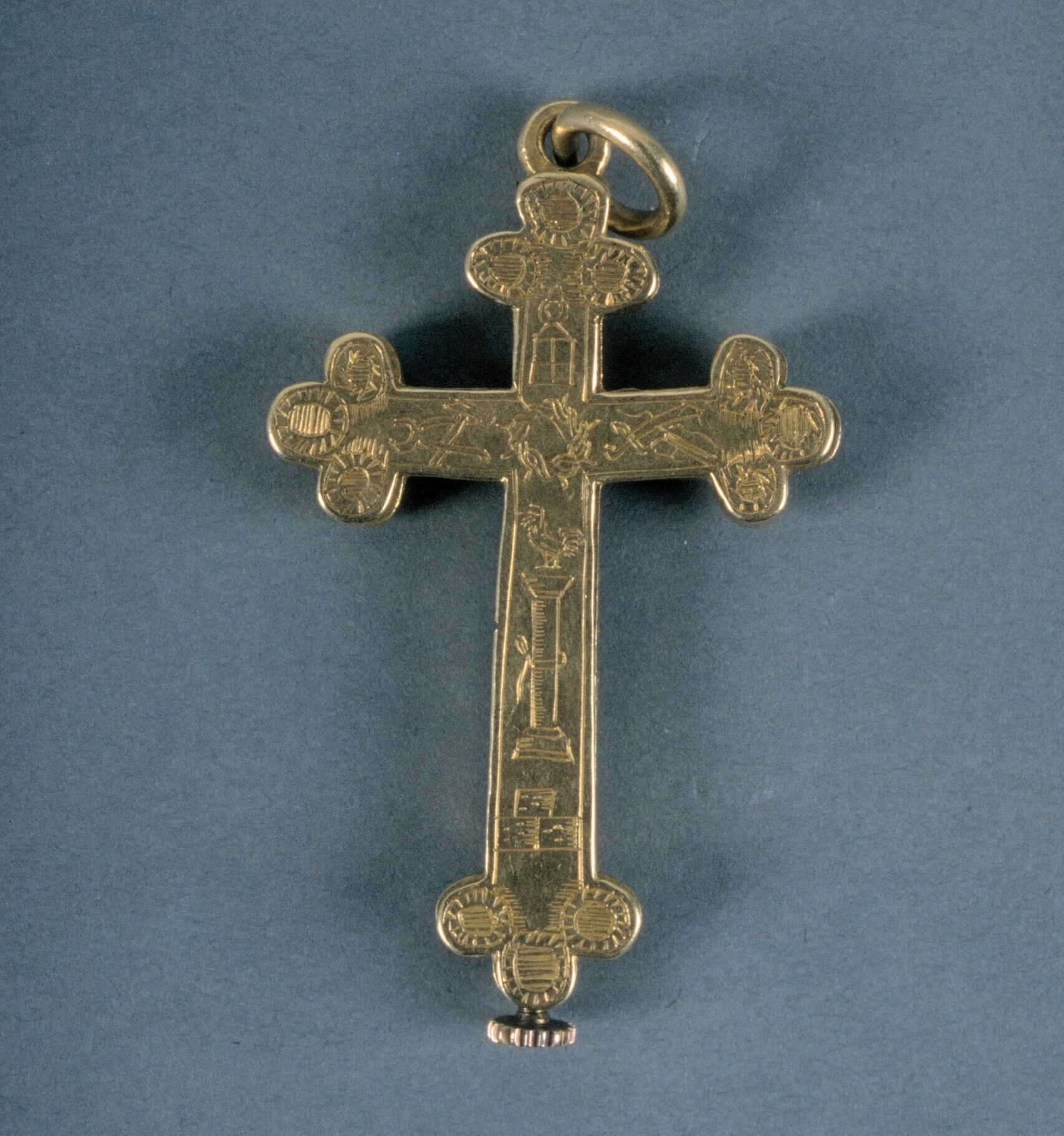
Cross (Reliquary)
HCM 072
19th century
Gold
Japan, 18th or 19th century
Wood, lacquer, glass, metal
Reliquaries are not exclusive to the Christian faith. This object, which is held in the collections of the Chester Beatty Museum, comes from the Japanese Buddhist tradition. It is a shrine depicting the standing figure of Shō Kannon, the bodhisattva of compassion. Above the figure is a reliquary encased in glass. The shrine has two hinged doors, allowing its contents to be protectively enclosed within.
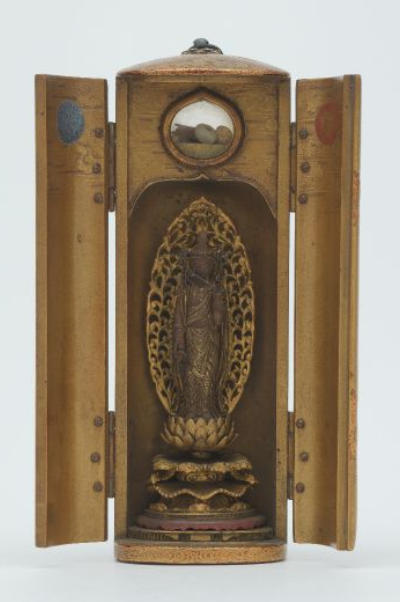
Portable shrine (zushi) with standing figure of Shō Kannon, © Chester Beatty Museum, licensed under CC BY 4.0
J 0764
Japan, 18th or 19th century
Wood, lacquer, glass, metal
What similarities do you notice between these reliquaries?
Religious beliefs are often preserved and transmitted through compilations of foundational religious texts. Since religious texts are sacred to their respective belief systems, they are viewed as deserving of particular reverence. Many are thus ornately adorned and kept in specially designed containers or covers.
13th century
Bronze, enamel
This plaque is named after Limoges, the city in France that pioneered this style of enamel. The plaque would have been inset into a highly decorated book cover and it may have been surrounded with precious jewels. These book covers are called ‘treasure bindings.’ The panel is decorated with a figure of Christ with his hand raised in the form of a blessing. It would have been bound to a Gospel lectionary manuscript or a similar religious text.
You can find the Limoges Plaque on display in the Hunt Museum in Study Room 1.
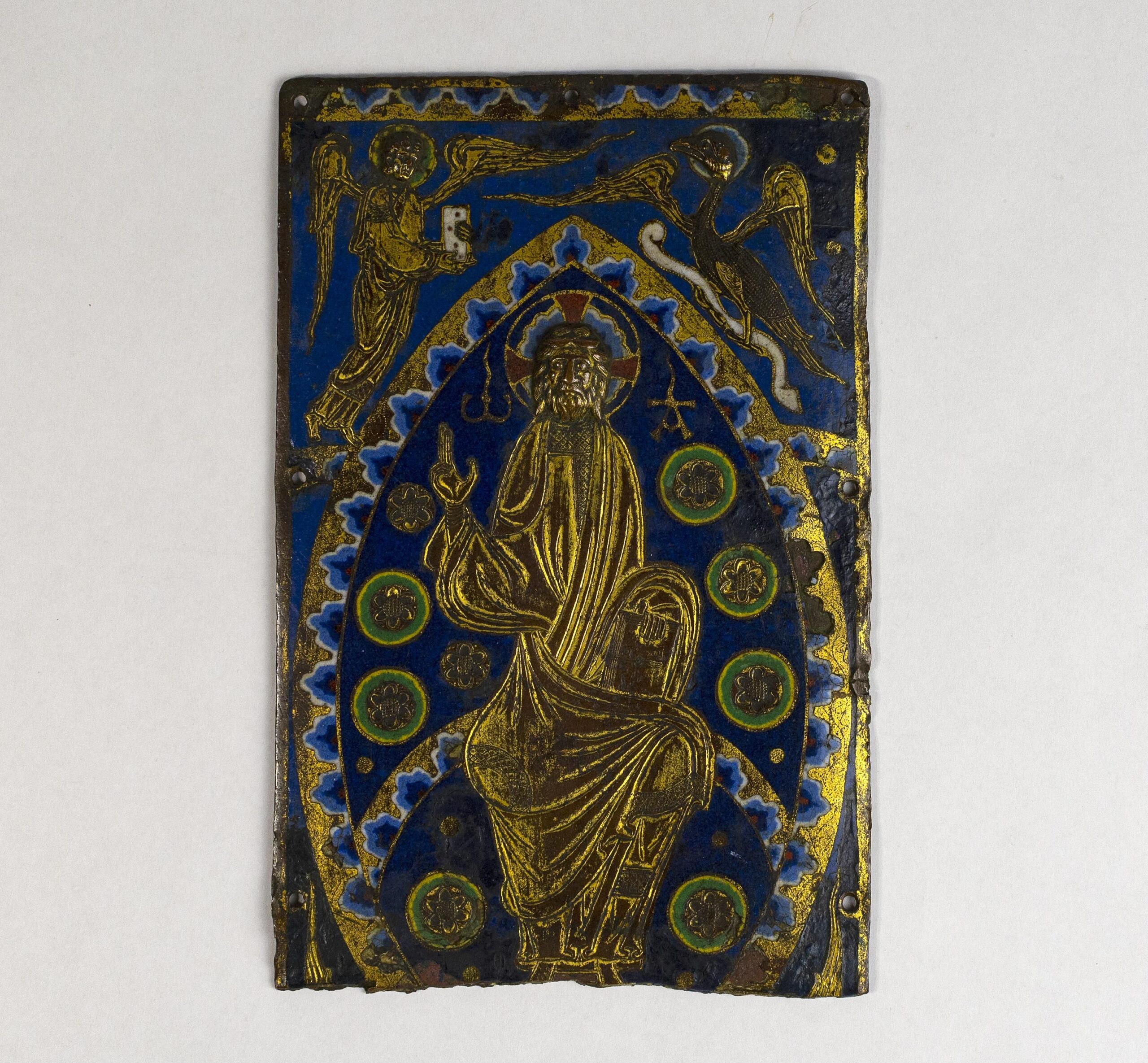
Enamelled Bronze Limoges plaque from a Gospel lectionary
HCM 079
13th century
Bronze, enamel
probably Italy, 18th century
Silver
Jewish texts often take the form of scrolls. Jewish scrolls are protectively stored in cases when not in use. This particular case at the Chester Beatty Museum was intended to cover a scroll of the Book of Esther, which is a portion of the Hebrew Bible, or Tanakh. This portion of the Hebrew Bible established the Jewish holiday of Purim as a celebration of the victory of the Jewish people over a plot to erase them. Passages from the Book of Esther are read aloud during Purim celebrations.
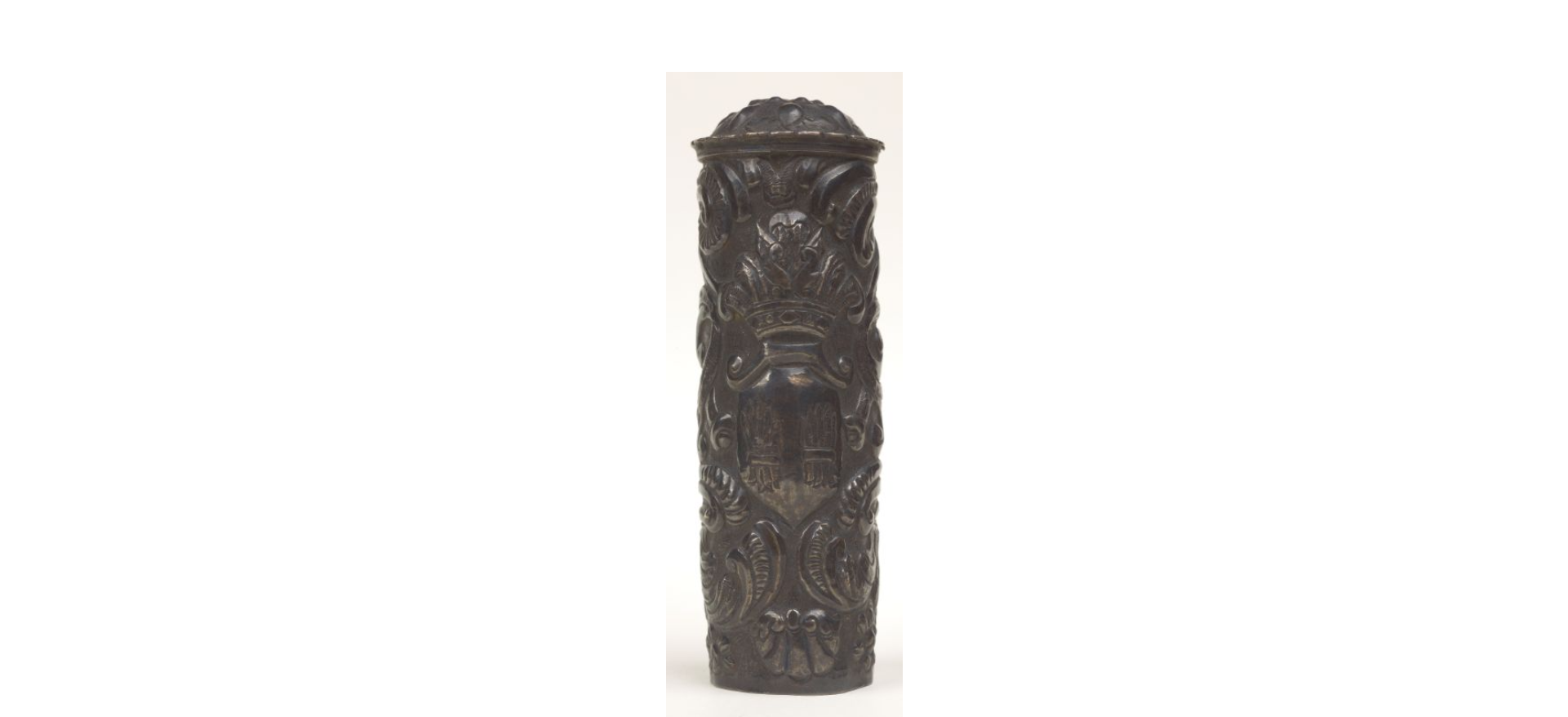
Silver case for an Esther scroll (Megillah), © Chester Beatty Museum, licensed under CC BY 4.0
Heb 768.1
probably Italy, 18th century
Silver
Shiraz, Iran, 16th century
Paper, gold, pigment, ink
The most common form of recording and distributing the Qur’an is through a traditionally-bound book. These bindings include highly decorative covers that protect the text through handling and storage. Most Islamic schools-of-thought prohibit the use of reproductions of people and animals in religious contexts, so floral and geometric designs are the preferred means of expressively representing and adorning the text. This Qur’an binding, also housed at the Chester Beatty Museum, features a front flap for additional protection of the book’s pages.
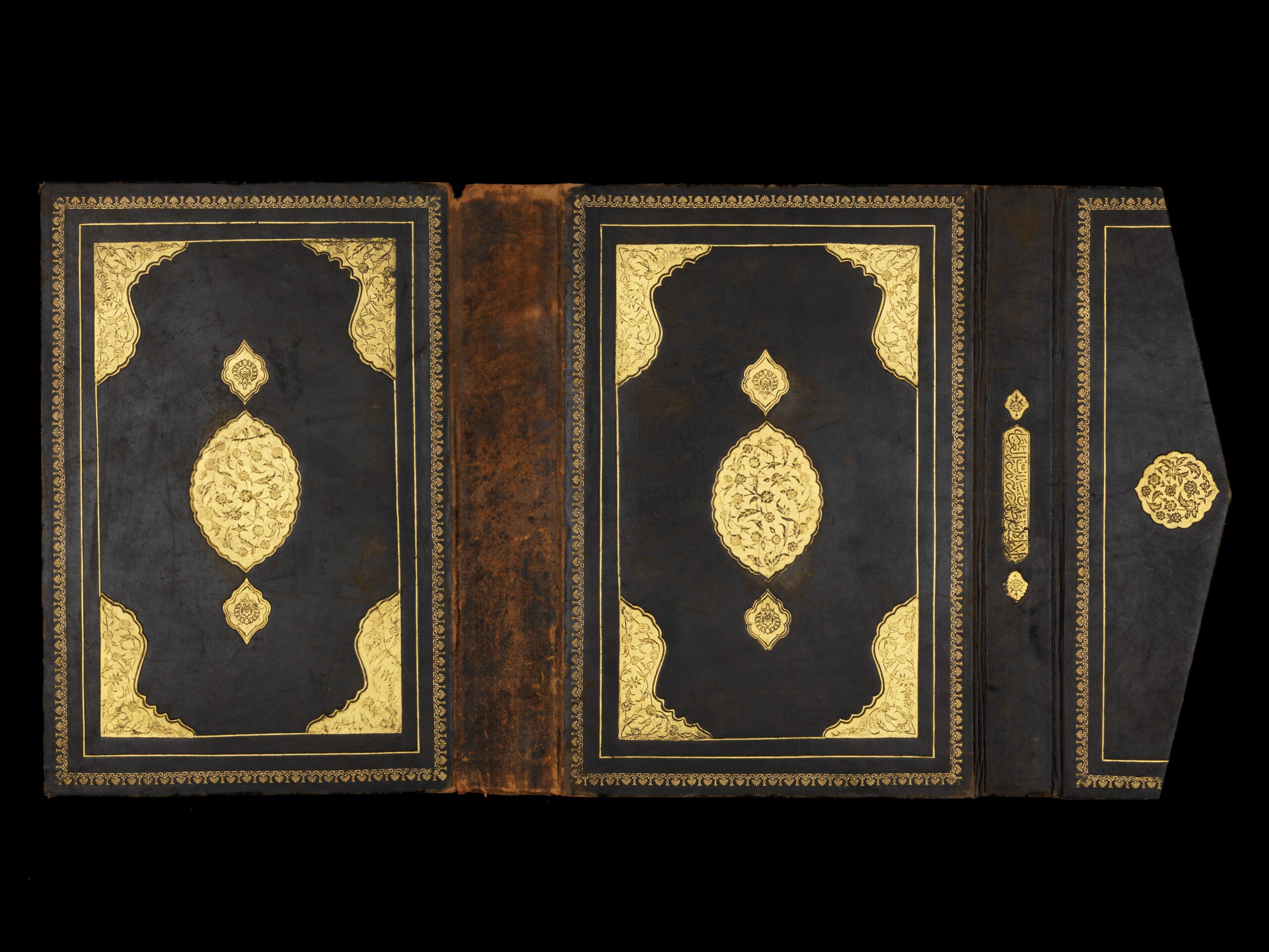
The Ruzbihan Qur’an (binding), © Chester Beatty Museum, licensed under CC BY 4.0
Is 1558
Shiraz, Iran, 16th century
Paper, gold, pigment, ink
Thailand, 19th century
Wood, lacquer
Another tradition of specially storing a sacred text comes from Buddhism. This box, also held in the collections of the Chester Beatty Museum, would have been used to store Buddhist religious texts. It is decorated with gold painted geometric designs and images of seated figures.
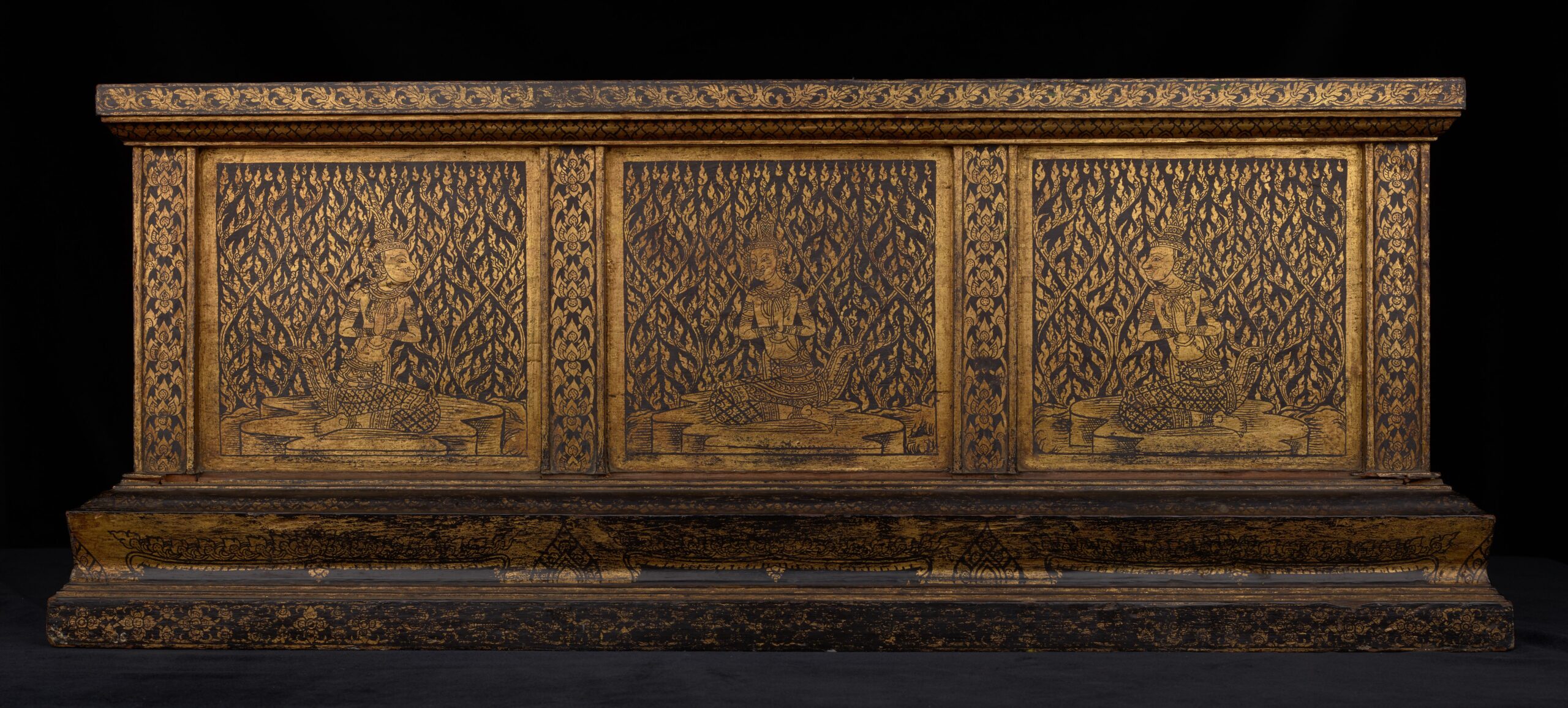
Black and gold lacquer scripture box, © Chester Beatty Museum, licensed under CC BY 4.0
Thi 1364
Thailand, 19th century
Wood, lacquer
Each of these objects demonstrates something of the values of the associated religious tradition. Although each of these containers and covers is unique, they all share in one purpose: to serve as physical and visual representations of the reverence owed to their contents.
Although the objects in this exhibition are all in museums, many of these types of items are commonly used by practitioners of the respective faith groups.
Have you ever interacted with objects like these?
How do you store things that are important to you?
If looking for one of our objects, please click here
